
No Code platforms facilitate and streamline application creation through visual drag-and-drop tools, ready-to-use components, and templates, allowing you to design interfaces and business logic without the need for programming.
No Code platforms enable comprehensive automation of business workflows, from simple to complex cross-departmental processes, helping to digitize internal operations and customer-facing processes to deliver more personalized experiences.
No Code platforms offer predefined applications and components that allow you to quickly create solutions without starting from scratch, including modules for data management, sales, and services.
No Code platforms automate and simplify application lifecycle management, including testing, deployment, and releases, as well as facilitating the organization of applications and integrations.
No Code platforms offer connectors and applications ready to integrate third-party services, and also allow you to create custom integrations using visual interfaces to work with APIs such as REST or SOAP.
No Code platforms integrate AI and machine learning tools that enable the creation of models for prediction, analysis, and personalization without the need for programming or data experts.
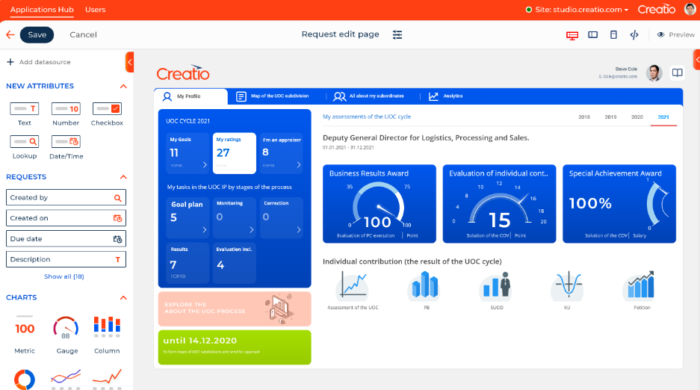
The No Code No Code enables software engineers and non-technical users to build applications and automate workflows using a visual interface and configuration. It significantly accelerates the delivery of new software applications compared to traditional development approaches, enabling businesses to innovate faster and resolve IT bottlenecks.
By providing easy-to-use yet powerful tools for end-to-end application development, including UI/UX design tools, AI/ML modeling, and integrated automated quality assurance, the No Code approach enables all employees to become competent software creators without having to learn how to program.
Consider the following key reasons to choose and adopt a No Code development platform:
No Code tools allow practically any user without IT skills to quickly create new apps and digital workflows. This opportunity helps to take some load off the IT department's shoulders, allowing professional engineers to focus on more complex projects.
The traditional software development process is often time-consuming, complex, and expensive. No Code development platforms offer a rich set of tools, such as drag-and-drop UI/UX designers, business rule editors, composable applications, and templates, that allow users to build applications in a fraction of the usual time.
No Code development platforms are designed to be user-friendly, but not all platforms are created equal. It's essential to evaluate the ease of use of each platform and consider the learning curve for your team. Look for platforms that offer intuitive interfaces and comprehensive documentation.
Compared to traditional processes and legacy technologies, digitalization provides organizations with many significant benefits, such as end-to-end process automation, cross-departmental alignment, and the ability to adapt quickly to an ever-changing work environment. Implementing No Code platforms is essential to digital transformation as they help organizations build and automate enterprise-grade workflows of any complexity – without using code, deep technical knowledge, and any other restrictions.

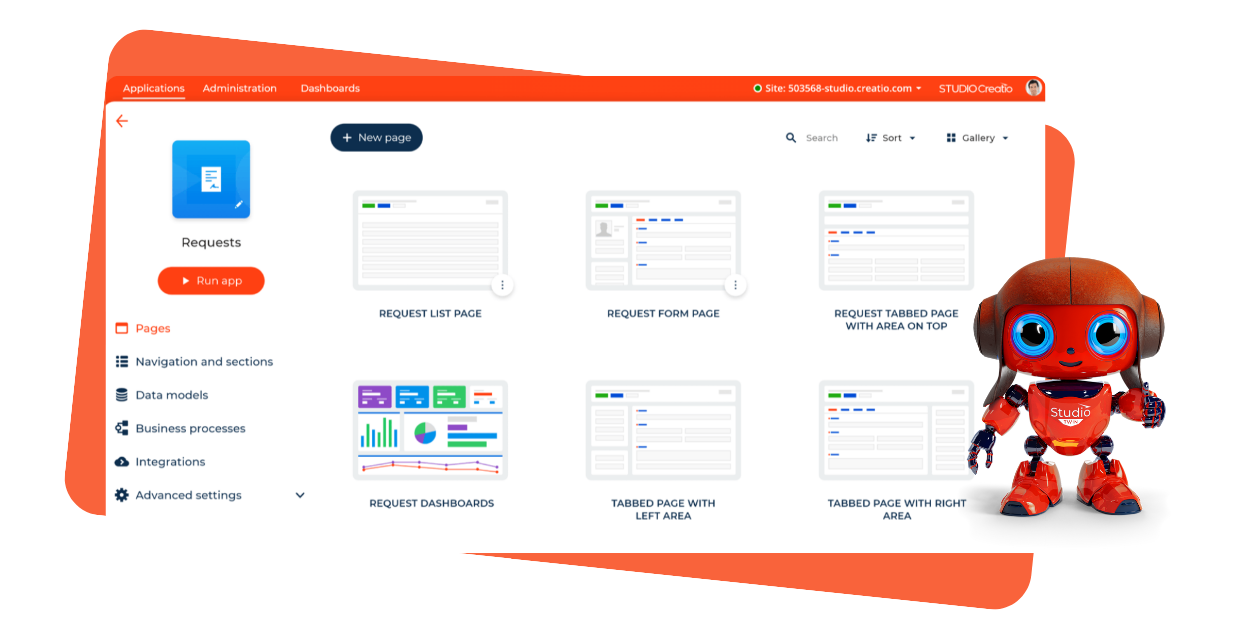

Your organization expects to implement multiple applications and workflows
Your requirements contain unique processes that will require intensive customization
There is a lack of ready-made applications available in the market for your specific use cases, or the available applications do not provide the necessary level of freedom

Ready-to-use applications, vertical solutions, and templates to extend the platform's functionality and accelerate productivity.


